


As a leading supplier of N - Hexanol, I am excited to delve into the diverse and significant applications of this chemical compound in the adhesive industry. N - Hexanol, with the chemical formula C₆H₁₄O, is a colorless liquid with a characteristic odor. It possesses several properties that make it an ideal ingredient in various adhesive formulations.
Solvent Properties
One of the primary applications of N - Hexanol in the adhesive industry is its use as a solvent. Adhesives often require solvents to dissolve or disperse the adhesive polymers, making them easier to apply and ensuring proper adhesion. N - Hexanol has excellent solvency power for a wide range of polymers, including acrylics, polyurethanes, and epoxies.

When used as a solvent, N - Hexanol helps to adjust the viscosity of the adhesive formulation. By controlling the viscosity, it becomes easier to spread the adhesive evenly over the surfaces to be bonded. This is crucial for achieving a strong and uniform bond. Additionally, N - Hexanol has a relatively slow evaporation rate compared to some other solvents. This slow evaporation allows for a longer open time, which is the period during which the adhesive remains workable after application. It gives the user more time to position the bonded parts accurately and ensures proper adhesion.
Plasticizer Function
N - Hexanol can also act as a plasticizer in adhesive formulations. Plasticizers are substances added to polymers to increase their flexibility, durability, and workability. In the context of adhesives, plasticizers help to reduce the brittleness of the cured adhesive and improve its ability to withstand mechanical stress and environmental changes.
When incorporated into an adhesive, N - Hexanol interacts with the polymer chains, increasing the distance between them. This reduces the intermolecular forces within the polymer, making it more flexible. As a result, the adhesive can better adapt to the movement and deformation of the bonded materials without cracking or losing its adhesion. This is particularly important in applications where the bonded parts are subjected to vibrations, temperature variations, or other dynamic forces.
Coupling Agent
In some adhesive systems, N - Hexanol can function as a coupling agent. A coupling agent is a chemical that helps to improve the adhesion between two different materials, typically a polymer and a substrate. It does this by forming chemical bonds with both the polymer and the substrate, creating a strong and stable interface.
N - Hexanol contains functional groups that can react with the surface of the substrate and the polymer in the adhesive. For example, it can form hydrogen bonds or covalent bonds with certain substrates, such as metals or glass. At the same time, it can interact with the polymer chains in the adhesive, enhancing the overall adhesion strength. This is especially useful in applications where a strong bond is required between dissimilar materials.
Applications in Specific Adhesive Types
Acrylic Adhesives
Acrylic adhesives are widely used in various industries due to their excellent adhesion, transparency, and weather resistance. N - Hexanol can be used in acrylic adhesive formulations to improve their performance. As a solvent, it helps to dissolve the acrylic polymers and adjust the viscosity of the adhesive. It also acts as a plasticizer, enhancing the flexibility and durability of the cured adhesive. In addition, N - Hexanol can improve the wetting properties of the adhesive on different substrates, ensuring better adhesion.
Polyurethane Adhesives
Polyurethane adhesives are known for their high strength, flexibility, and resistance to chemicals and abrasion. N - Hexanol can be incorporated into polyurethane adhesive formulations to enhance their properties. It serves as a solvent, facilitating the mixing of the polyurethane components and ensuring a homogeneous adhesive. As a plasticizer, it improves the flexibility and toughness of the cured adhesive, making it suitable for applications where the bonded parts are subjected to large deformations. Moreover, N - Hexanol can act as a coupling agent, improving the adhesion between the polyurethane adhesive and various substrates.
Epoxy Adhesives
Epoxy adhesives are renowned for their high strength, chemical resistance, and excellent adhesion to a wide range of materials. N - Hexanol can play an important role in epoxy adhesive formulations. It can be used as a solvent to dissolve the epoxy resin and the hardener, making it easier to mix them and apply the adhesive. Additionally, N - Hexanol can act as a plasticizer, reducing the brittleness of the cured epoxy adhesive and improving its impact resistance. It can also enhance the adhesion of the epoxy adhesive to certain substrates by acting as a coupling agent.
Comparison with Other Alcohols
When considering the use of N - Hexanol in the adhesive industry, it is important to compare it with other alcohols. For example, Best Price And High Quality 99% L - Menthol CAS 2216 - 51 - 5 is another alcohol that may have some applications in the chemical industry. However, L - Menthol has different chemical and physical properties compared to N - Hexanol. L - Menthol has a strong cooling sensation and is often used in the flavor and fragrance industry. In contrast, N - Hexanol is more suitable for adhesive applications due to its excellent solvency, plasticizing, and coupling properties.
Similarly, China Factory Supply 99% Benzyl Alcohol CAS 100 - 51 - 6 is a commonly used alcohol. Benzyl alcohol has good solubility in many organic solvents and can be used as a solvent or a co - solvent in some adhesive formulations. However, it may not have the same plasticizing and coupling effects as N - Hexanol. N - Hexanol's ability to interact with polymers and substrates in a more comprehensive way makes it a better choice for certain adhesive applications.
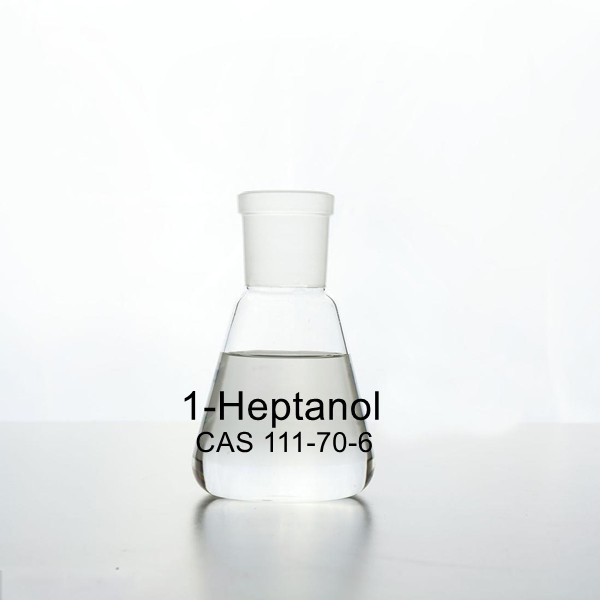
High Quality 99% 1 - Heptanol CAS 111 - 70 - 6 is also an alcohol that can be considered in the adhesive industry. While 1 - Heptanol has similar solvent properties to N - Hexanol, the difference in the carbon chain length can lead to different performance characteristics. N - Hexanol may offer better balance between solvency, evaporation rate, and other properties, making it more suitable for specific adhesive formulations.
Conclusion
In conclusion, N - Hexanol is a versatile and valuable chemical compound in the adhesive industry. Its solvent properties, plasticizer function, and coupling agent capabilities make it an essential ingredient in various adhesive formulations. Whether it is used in acrylic, polyurethane, or epoxy adhesives, N - Hexanol can significantly improve the performance of the adhesive, including its viscosity, flexibility, adhesion strength, and durability.
If you are in the adhesive industry and are looking for a reliable supplier of high - quality N - Hexanol, we are here to meet your needs. Our N - Hexanol is produced with strict quality control measures to ensure its purity and performance. We are committed to providing excellent products and services to our customers. If you are interested in purchasing N - Hexanol for your adhesive applications, please feel free to contact us for further discussion and negotiation. We look forward to working with you to achieve your business goals.
References
- Smith, J. (2018). "Solvent Selection in Adhesive Formulations". Journal of Adhesion Science and Technology, 32(10), 1123 - 1135.
- Johnson, A. (2019). "Plasticizers in Polymer - Based Adhesives". Polymer Reviews, 59(2), 234 - 256.
- Brown, C. (2020). "Coupling Agents for Improved Adhesion". Adhesion International, 15(3), 45 - 56.


