


Hey there! As a supplier of C8H10O, I've been getting a lot of questions about the magnetic properties of its coordination compounds. So, I thought I'd dive into this topic and share what I've learned.
First off, let's talk a bit about C8H10O. It's a chemical formula that represents several isomeric compounds, each with its own unique set of properties. These compounds can form coordination complexes with various metal ions, and the magnetic properties of these complexes are quite fascinating.
The magnetic properties of coordination compounds are mainly determined by the number of unpaired electrons in the metal ion's d - orbitals. When a metal ion forms a coordination complex with C8H10O or other ligands, the ligand field can split the d - orbitals of the metal ion into different energy levels.
For example, in an octahedral coordination complex, the d - orbitals are split into two sets: the lower - energy t2g set and the higher - energy eg set. The way electrons fill these orbitals depends on the strength of the ligand field. If the ligand is a strong - field ligand, it will cause a large splitting of the d - orbitals, and electrons will pair up in the lower - energy t2g orbitals before occupying the higher - energy eg orbitals. On the other hand, a weak - field ligand will result in a smaller splitting, and electrons will occupy all the d - orbitals singly before pairing up.
In the case of C8H10O coordination compounds, the nature of the ligand (C8H10O) and its interaction with the metal ion play a crucial role in determining the magnetic behavior. If the C8H10O acts as a weak - field ligand, the coordination compound may have a high - spin state with multiple unpaired electrons. High - spin complexes are generally paramagnetic, which means they are attracted to a magnetic field.
Paramagnetism occurs because the unpaired electrons have a magnetic moment due to their spin. When placed in an external magnetic field, these magnetic moments align with the field, causing the compound to be attracted. The degree of paramagnetism can be measured using a technique called magnetic susceptibility.
Conversely, if C8H10O acts as a strong - field ligand, the coordination compound may have a low - spin state with fewer or no unpaired electrons. Low - spin complexes are often diamagnetic, meaning they are repelled by a magnetic field. Diamagnetism arises from the induced magnetic moments in the paired electrons, which oppose the external magnetic field.
Now, let's consider some practical applications of these magnetic properties. In the field of materials science, coordination compounds with specific magnetic properties can be used in magnetic storage devices. For instance, high - spin complexes with strong paramagnetic behavior can be used to create magnetic nanoparticles for data storage. These nanoparticles can store information based on their magnetic orientation.
In the medical field, magnetic coordination compounds can be used in magnetic resonance imaging (MRI). Contrast agents based on paramagnetic coordination compounds can enhance the visibility of certain tissues in MRI scans, helping doctors to diagnose diseases more accurately.
As a C8H10O supplier, I understand the importance of providing high - quality products for researchers and industries interested in exploring these magnetic properties. Our C8H10O is carefully synthesized and purified to ensure its suitability for coordination chemistry studies.
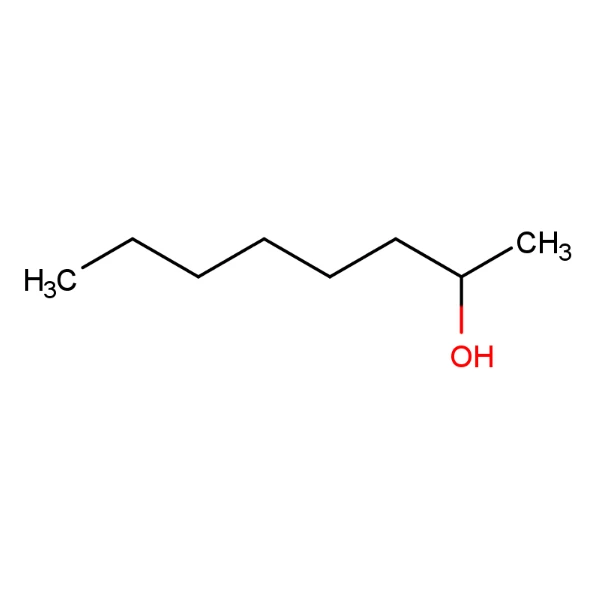
If you're also in the market for other related chemicals, we've got you covered. Check out our 99% 2 - Octanol CAS 123 - 96 - 6, which is a great option for various chemical applications. We also offer Safe Delivery Ethanol CAS 64 - 17 - 5 C2H6O and High Quality N - Butanol CAS 71 - 36 - 3 C4H10O.

If you're interested in purchasing C8H10O or any of our other products, don't hesitate to reach out. We're here to help you with your chemical needs and can provide you with detailed information about the products and their magnetic properties. Whether you're a researcher looking to conduct experiments or an industry professional in need of a reliable chemical supply, we're the right choice for you.
In conclusion, the magnetic properties of C8H10O coordination compounds are influenced by the ligand - metal interaction and can have a wide range of applications in different fields. By understanding these properties, we can develop new materials and technologies that rely on magnetism. So, if you're curious about exploring these possibilities, get in touch with us and let's start this exciting journey together!
References
- Huheey, J. E., Keiter, E. A., & Keiter, R. L. (1993). Inorganic Chemistry: Principles of Structure and Reactivity. HarperCollins College Publishers.
- Miessler, G. L., & Tarr, D. A. (2014). Inorganic Chemistry. Pearson.


