


As a supplier of C5H12O, I am often asked about the products that result from its reaction with phenols. In this blog post, I will delve into the chemistry behind these reactions, the potential products, and their applications.
Understanding C5H12O and Phenols
C5H12O represents a group of organic compounds known as pentanols. Pentanols have five carbon atoms, twelve hydrogen atoms, and one oxygen atom, and they exist in several isomeric forms, including 1 - pentanol, 2 - pentanol, and 3 - pentanol, as well as their branched - chain isomers. These alcohols are colorless liquids with characteristic alcoholic odors and are used in a variety of industrial applications, such as solvents, flavorings, and intermediates in chemical synthesis.
Phenols, on the other hand, are aromatic compounds with a hydroxyl group (-OH) attached directly to a benzene ring. The most common example is phenol itself (C6H5OH), which has a wide range of applications in the production of plastics, resins, and pharmaceuticals. Phenols are acidic in nature due to the resonance stabilization of the phenoxide ion formed upon deprotonation.
Reactions between C5H12O and Phenols
The reactions between pentanols (C5H12O) and phenols can occur under different conditions and involve different reaction mechanisms. The most common types of reactions are dehydration and esterification.
Dehydration Reaction
In the presence of a strong acid catalyst, such as sulfuric acid or phosphoric acid, pentanols can undergo dehydration to form alkenes. When reacting with phenols, a dehydration reaction can lead to the formation of ethers. The general reaction mechanism involves the protonation of the hydroxyl group of the pentanol, followed by the loss of a water molecule to form a carbocation intermediate. The phenol then acts as a nucleophile and attacks the carbocation, resulting in the formation of an ether.
For example, if we consider the reaction between 1 - pentanol and phenol:
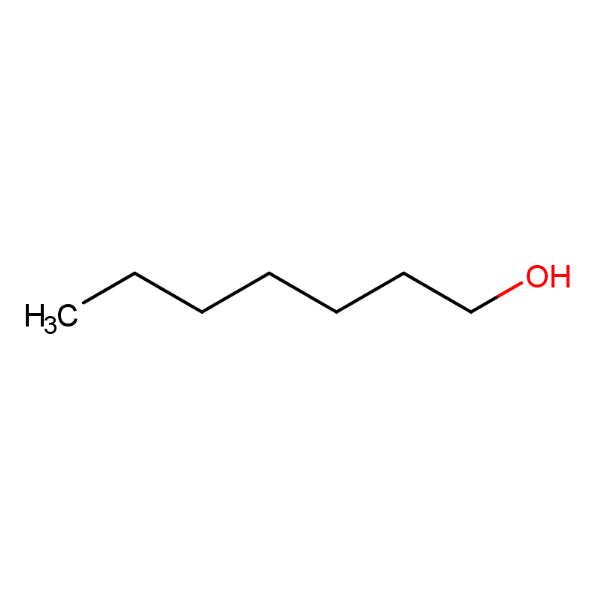

- Protonation of 1 - pentanol:
(CH_3(CH_2)_3CH_2OH + H^+\rightleftharpoons CH_3(CH_2)_3CH_2OH_2^+) - Loss of water to form a carbocation:
(CH_3(CH_2)_3CH_2OH_2^+\rightleftharpoons CH_3(CH_2)_3CH_2^++H_2O) - Nucleophilic attack by phenol:
(C_6H_5OH+CH_3(CH_2)_3CH_2^+\rightleftharpoons C_6H_5OCH_2(CH_2)_3CH_3 + H^+)
The resulting product, phenyl pentyl ether, is a colorless liquid with a pleasant odor and can be used in the fragrance industry.
Esterification Reaction
Esterification is another important reaction between pentanols and phenols. When pentanols react with phenolic acids (phenols with a carboxylic acid group attached to the benzene ring), esters can be formed. This reaction typically requires an acid catalyst and heat. The reaction mechanism involves the protonation of the carbonyl group of the carboxylic acid, followed by the nucleophilic attack of the pentanol on the carbonyl carbon, and finally, the loss of a water molecule.
For instance, if we consider the reaction between 2 - pentanol and salicylic acid (a phenolic acid):
- Protonation of salicylic acid:
(C_6H_4(OH)COOH + H^+\rightleftharpoons C_6H_4(OH)COOH_2^+) - Nucleophilic attack by 2 - pentanol:
(C_6H_4(OH)COOH_2^++CH_3CH(OH)CH_2CH_2CH_3\rightleftharpoons C_6H_4(OH)COOCH(CH_3)CH_2CH_2CH_3 + H_2O + H^+)
The resulting ester, pentyl salicylate, is used in the flavor and fragrance industry due to its pleasant, fruity odor.
Applications of the Reaction Products
The products formed from the reactions between C5H12O and phenols have a wide range of applications in various industries.
Fragrance and Flavor Industry
As mentioned earlier, the ethers and esters formed from these reactions can have pleasant odors and flavors. Phenyl pentyl ether and pentyl salicylate are just two examples of compounds that are used in perfumes, colognes, and food flavorings. These compounds can contribute to the overall aroma and taste profile of a product, adding notes of freshness, fruitiness, or floral scents.
Chemical Synthesis
The reaction products can also serve as intermediates in the synthesis of other more complex organic compounds. For example, the ethers can be further functionalized through reactions such as oxidation or substitution to form new compounds with different properties and applications. The esters can be hydrolyzed back to the corresponding phenols and pentanols under basic conditions, which can be useful in recycling or further modification of the starting materials.
Pharmaceutical Industry
Some of the reaction products may have potential pharmaceutical applications. Phenolic ethers and esters can exhibit biological activities such as antibacterial, antifungal, and anti - inflammatory properties. These compounds can be further investigated for their potential use in the development of new drugs or as lead compounds for drug discovery.
Our C5H12O Products
As a reliable supplier of C5H12O, we offer high - quality pentanols for various applications. Our products are produced using advanced manufacturing processes and strict quality control measures to ensure their purity and consistency.
If you are interested in our C5H12O products, you can explore our product range on our website. We have 99% 1 - Heptanol CAS 111 - 70 - 6, which is a high - purity alcohol with excellent solubility and stability. We also supply China Factory Supply Pentanol CAS 71 - 41 - 0, which is produced in our state - of - the - art factory to meet the highest industry standards. Additionally, we offer Manufacturer Supply 99% Isopropyl Alcohol CAS 67 - 63 - 0, which is widely used in the pharmaceutical and cleaning industries.
Contact Us for Procurement
If you are interested in purchasing our C5H12O products for your chemical reactions with phenols or other applications, we encourage you to contact us for procurement. Our team of experts is ready to assist you with product selection, technical support, and order processing. Whether you need a small sample for research purposes or a large - scale supply for industrial production, we can meet your requirements.
References
- Smith, J. G. (2015). Organic Chemistry. McGraw - Hill Education.
- March, J. (1992). Advanced Organic Chemistry: Reactions, Mechanisms, and Structure. John Wiley & Sons.
- Pavia, D. L., Lampman, G. M., Kriz, G. S., & Engel, R. G. (2014). Introduction to Organic Laboratory Techniques: A Microscale Approach. Cengage Learning.


