


Hey there! I'm a supplier of 78 - 83 - 1, and today I wanna chat about the electron microscopy methods for this compound. Electron microscopy is a super cool and powerful tool in the scientific world, and it can tell us a whole lot about 78 - 83 - 1.
First off, let's understand what electron microscopy is all about. Unlike traditional light microscopes that use light to form an image, electron microscopes use a beam of electrons. This allows for much higher resolution, which means we can see the tiniest details of 78 - 83 - 1 that would be impossible to make out with a regular microscope.

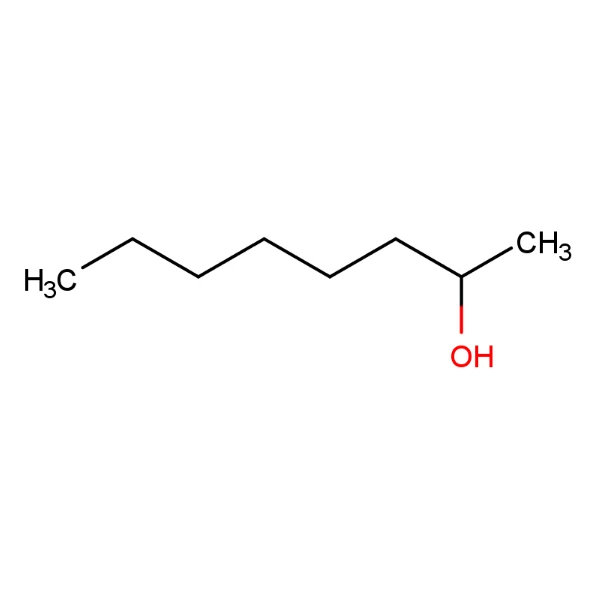
One of the most common electron microscopy methods is Scanning Electron Microscopy (SEM). In SEM, a focused beam of electrons scans the surface of the 78 - 83 - 1 sample. As the electrons interact with the sample, they generate various signals, such as secondary electrons and backscattered electrons. These signals are then detected and used to create a detailed 3D - like image of the sample's surface. This is really useful for us as suppliers because it can show us the morphology of 78 - 83 - 1, like its shape, size, and surface texture. For example, if we're looking at 78 - 83 - 1 in a powder form, SEM can tell us if the particles are spherical, irregular, or have some other unique shape. It can also help us detect any impurities or defects on the surface of the particles.
Another great method is Transmission Electron Microscopy (TEM). TEM works a bit differently. Instead of scanning the surface, a beam of electrons is transmitted through a very thin sample of 78 - 83 - 1. The electrons that pass through the sample are then projected onto a detector to form an image. TEM is excellent for looking at the internal structure of 78 - 83 - 1. We can see the arrangement of atoms and molecules within the compound, which gives us insights into its crystal structure and other important properties. For instance, if 78 - 83 - 1 has a specific crystal lattice, TEM can reveal its orientation and any possible lattice defects. This information is crucial for understanding the physical and chemical properties of the compound, which in turn affects its performance in various applications.
There's also Energy - Dispersive X - ray Spectroscopy (EDS) which is often used in conjunction with SEM or TEM. EDS can analyze the elemental composition of 78 - 83 - 1. When the electron beam hits the sample, it causes the atoms in the sample to emit characteristic X - rays. By analyzing these X - rays, we can determine which elements are present in 78 - 83 - 1 and their relative abundances. This is really handy for quality control. We can make sure that the 78 - 83 - 1 we're supplying has the correct elemental composition and doesn't have any unwanted elements that could affect its quality.
Now, why is all this important for us as a 78 - 83 - 1 supplier? Well, for starters, it helps us ensure the quality of our product. By using electron microscopy methods, we can accurately characterize 78 - 83 - 1 and make sure it meets the standards and specifications required by our customers. We can also use this information to improve our manufacturing processes. If we notice any issues with the morphology or internal structure of 78 - 83 - 1, we can adjust our production methods to produce a better - quality product.
In addition to quality control and process improvement, electron microscopy can also help us in research and development. We can use these techniques to explore new applications for 78 - 83 - 1. For example, if we discover a new crystal structure or surface property through electron microscopy, it might open up new possibilities for using 78 - 83 - 1 in different industries.
If you're in the market for high - quality 78 - 83 - 1, you might also be interested in some of our other products. We also supply Manufacturer Supply 99% 1,4 - Butanediol CAS 110 - 63 - 4, 99% 2 - Octanol CAS 123 - 96 - 6, and High Quality N - Butanol CAS 71 - 36 - 3 C4H10O. These products also go through rigorous quality checks using electron microscopy and other advanced analytical techniques to ensure their top - notch quality.
If you're interested in purchasing 78 - 83 - 1 or any of our other products, don't hesitate to reach out for a chat. We're always happy to discuss your specific needs and how we can meet them. Whether you need a small sample for testing or a large - scale supply for your production, we've got you covered.
References
- Goldstein, J. I., Newbury, D. E., Echlin, P., Joy, D. C., Fiori, C., & Lifshin, E. (2003). Scanning electron microscopy and X - ray microanalysis. Springer Science & Business Media.
- Williams, D. B., & Carter, C. B. (2009). Transmission electron microscopy: A textbook for materials science. Springer Science & Business Media.


