


Hey there! As a pentanol supplier, I've been getting a lot of questions lately about the differences between different isomers of pentanol. So, I thought I'd sit down and write a blog post to clear things up.
First off, let's talk about what isomers are. Isomers are compounds that have the same molecular formula but different structural arrangements. In the case of pentanol, the molecular formula is C₅H₁₂O. But because of the different ways the atoms can be arranged, there are eight different isomers of pentanol.
1. 1 - Pentanol
Let's start with 1 - pentanol. It's also known as n - pentanol. This isomer has the hydroxyl group (-OH) attached to the first carbon atom in the five - carbon chain. It's a primary alcohol, which means the carbon atom bonded to the -OH group is only attached to one other carbon atom.
One of the key things about 1 - pentanol is its relatively high boiling point compared to some of the other isomers. This is because of the strong intermolecular forces, specifically hydrogen bonding. The hydrogen bonding occurs between the -OH groups of different 1 - pentanol molecules.
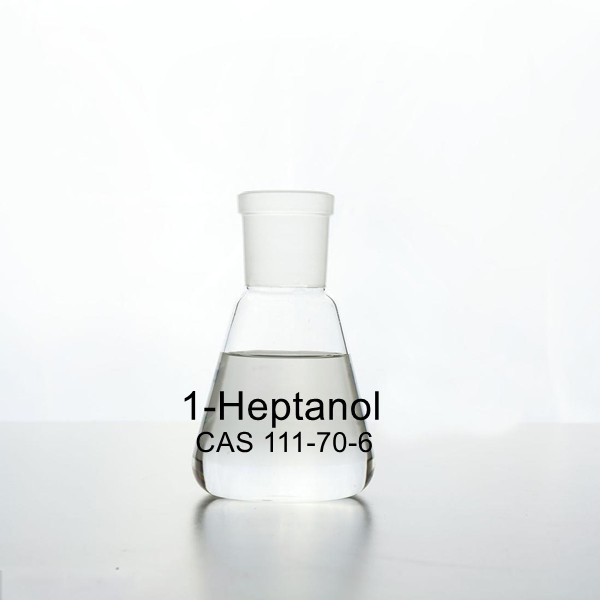
1 - pentanol has a somewhat pleasant, alcoholic odor. It's used in a variety of applications. For example, it can be used as a solvent in the production of paints, coatings, and varnishes. It can also be used in the synthesis of esters, which are often used in the fragrance and flavor industries. If you're interested in other high - quality alcohol products, check out High Quality 99% 1 - Heptanol CAS 111 - 70 - 6.
2. 2 - Pentanol
Next up is 2 - pentanol. Here, the hydroxyl group is attached to the second carbon atom in the five - carbon chain. It's a secondary alcohol, as the carbon atom with the -OH group is attached to two other carbon atoms.
2 - pentanol has different physical properties compared to 1 - pentanol. Its boiling point is lower than that of 1 - pentanol. This is because the branching in the molecule disrupts the intermolecular forces to some extent. The hydrogen bonding is still present, but it's not as effective as in 1 - pentanol.
In terms of applications, 2 - pentanol can also be used as a solvent, but its solubility characteristics are a bit different from 1 - pentanol. It can be used in the production of some pharmaceuticals and in the extraction of certain organic compounds.
3. 3 - Pentanol
3 - pentanol has the hydroxyl group attached to the third carbon atom in the chain. Like 2 - pentanol, it's a secondary alcohol. The physical properties of 3 - pentanol are quite similar to 2 - pentanol. The boiling point is in the same range, and it also has a similar solubility profile.
3 - pentanol is often used in the same types of applications as 2 - pentanol. It can be involved in chemical reactions where a secondary alcohol is required. For example, it can be used in the synthesis of ketones through oxidation reactions.
4. 2 - Methyl - 1 - butanol
This isomer has a methyl group (-CH₃) attached to the second carbon atom of the four - carbon chain, and the -OH group is on the first carbon atom. It's a primary alcohol.
The presence of the methyl group changes the shape and properties of the molecule. The boiling point of 2 - methyl - 1 - butanol is lower than that of 1 - pentanol. This is due to the increased branching, which reduces the surface area available for intermolecular interactions.
It's used in the production of flavors and fragrances. Some of the esters derived from 2 - methyl - 1 - butanol have fruity odors, making them useful in the food and beverage industry.
5. 3 - Methyl - 1 - butanol
3 - methyl - 1 - butanol, also known as isoamyl alcohol, has a methyl group on the third carbon atom of the four - carbon chain with the -OH group on the first carbon atom. It's a primary alcohol.
Isoamyl alcohol has a characteristic smell, often described as a banana - like odor. It's widely used in the production of artificial flavors, especially banana and pear flavors. It's also used as a solvent in some industrial processes. If you're looking for other alcohol - based products, High Quality 99% 1,4 - Butanediol CAS 110 - 63 - 4 might be of interest to you.
6. 2 - Methyl - 2 - butanol
This is a tertiary alcohol, as the carbon atom with the -OH group is attached to three other carbon atoms. The presence of the three alkyl groups around the -OH group makes it more sterically hindered.
2 - methyl - 2 - butanol has a lower boiling point compared to the primary and secondary pentanol isomers. This is because the steric hindrance reduces the effectiveness of hydrogen bonding. It's used in some chemical reactions where a more reactive or less - polar alcohol is required.
7. 3 - Methyl - 2 - butanol
3 - methyl - 2 - butanol is a secondary alcohol. The arrangement of the methyl group and the -OH group on the carbon chain gives it unique physical and chemical properties.
It has a boiling point that is in between some of the other secondary alcohol isomers. It can be used in the synthesis of various organic compounds, especially those that require a secondary alcohol with a specific structure.
8. 2,2 - Dimethyl - 1 - propanol
This isomer has two methyl groups attached to the second carbon atom of a three - carbon chain with the -OH group on the first carbon atom. It's a primary alcohol.
The highly branched structure of 2,2 - dimethyl - 1 - propanol results in relatively weak intermolecular forces compared to the linear pentanol isomers. This leads to a lower boiling point. It's used in some specialty chemical applications where a highly - branched primary alcohol is needed.
Reactivity Differences
In terms of reactivity, primary alcohols like 1 - pentanol, 2 - methyl - 1 - butanol, 3 - methyl - 1 - butanol, and 2,2 - dimethyl - 1 - propanol are more easily oxidized to aldehydes and then to carboxylic acids. Secondary alcohols such as 2 - pentanol, 3 - pentanol, 3 - methyl - 2 - butanol are oxidized to ketones. Tertiary alcohols like 2 - methyl - 2 - butanol are generally resistant to oxidation under normal conditions because there are no hydrogen atoms on the carbon atom attached to the -OH group.
Solubility Differences
Solubility in water is also different among the isomers. The more linear the pentanol isomer, the more soluble it is in water to some extent. This is because the polar -OH group can interact with water molecules through hydrogen bonding. As the branching increases, the non - polar part of the molecule becomes more dominant, and the solubility in water decreases.
Applications in Different Industries
The different isomers of pentanol find use in a wide range of industries. In the pharmaceutical industry, some isomers can be used as solvents or as starting materials for the synthesis of drugs. In the fragrance and flavor industry, the esters derived from pentanol isomers are used to create a variety of scents and tastes. In the paint and coating industry, the solubility and evaporation characteristics of different isomers are important for formulating the right products.
If you're in need of pentanol or other related alcohol products for your industry, don't hesitate to reach out. We're here to help you find the right isomer for your specific application. And if you're interested in other alcohol - based chemicals, check out China Factory Supply 99% Ethylene Glycol CAS 107 - 21 - 1.
Conclusion
As you can see, the different isomers of pentanol have a wide range of physical, chemical, and reactivity differences. These differences make them suitable for various applications in different industries. Whether you need a high - boiling - point solvent, a flavoring agent, or a starting material for chemical synthesis, there's a pentanol isomer that can meet your needs. So, if you're in the market for pentanol or have questions about which isomer is right for you, feel free to contact us for more information and to start a procurement discussion.
References
- "Organic Chemistry" by Paula Yurkanis Bruice
- "Introduction to Chemical Engineering Thermodynamics" by J.M. Smith, H.C. Van Ness, and M.M. Abbott


