


Hey there! As a supplier of N-Butanol, I often get asked about what comes out when N-Butanol burns. So, let's dig into this topic and find out what the combustion product of N-Butanol is.
First off, let's talk a bit about N-Butanol itself. N-Butanol, also known as 1-Butanol, is a colorless liquid with a characteristic alcohol smell. It's used in a bunch of industries, like the production of plastics, coatings, and even as a solvent. It's a pretty important chemical, and understanding its combustion products is crucial for safety and environmental reasons.
When N-Butanol undergoes combustion, it reacts with oxygen in the air. The combustion process is an exothermic reaction, which means it releases heat. The general chemical formula for N-Butanol is C₄H₉OH. When it burns, the carbon and hydrogen in the molecule react with oxygen to form carbon dioxide (CO₂) and water (H₂O).
The balanced chemical equation for the complete combustion of N-Butanol is:
C₄H₉OH + 6O₂ → 4CO₂ + 5H₂O
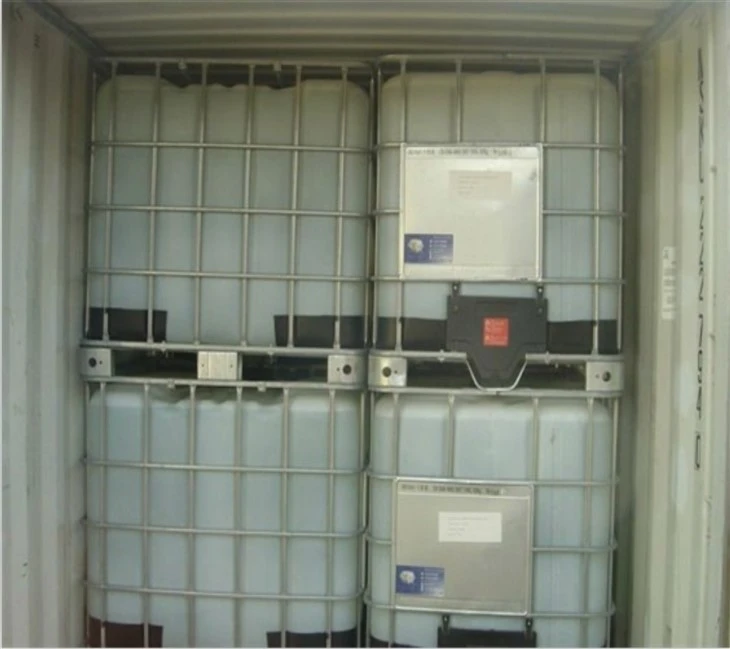

This equation tells us that one molecule of N-Butanol reacts with six molecules of oxygen to produce four molecules of carbon dioxide and five molecules of water. So, in simple terms, the main combustion products of N-Butanol are carbon dioxide and water.
But here's the thing. In real - world situations, combustion is often not complete. When there isn't enough oxygen available, incomplete combustion occurs. In incomplete combustion, instead of forming carbon dioxide, carbon monoxide (CO) is produced. Carbon monoxide is a very dangerous gas. It's colorless, odorless, and can be deadly if inhaled in high concentrations.
The equation for incomplete combustion of N-Butanol can be something like this:
2C₄H₉OH + 9O₂ → 4CO + 4CO₂ + 10H₂O
This shows that in incomplete combustion, a mixture of carbon monoxide, carbon dioxide, and water is formed.
Now, let's talk about the implications of these combustion products. Carbon dioxide is a greenhouse gas. When large amounts of N-Butanol are burned, the release of carbon dioxide can contribute to global warming. On the other hand, carbon monoxide is a health hazard. It binds to hemoglobin in the blood, preventing it from carrying oxygen effectively, which can lead to headaches, dizziness, and in severe cases, death.
As a supplier of N-Butanol, I'm really concerned about these aspects. We always make sure to provide safety guidelines to our customers. If you're using N-Butanol in a combustion - related process, it's important to ensure proper ventilation to prevent the build - up of carbon monoxide. Also, using the right amount of oxygen can help promote complete combustion and reduce the production of harmful by - products.
In addition to carbon dioxide, carbon monoxide, and water, there might be some other minor products during the combustion of N-Butanol. For example, small amounts of nitrogen oxides (NOₓ) can be formed if there is nitrogen in the air reacting at high temperatures. Nitrogen oxides are also pollutants that can contribute to air pollution and acid rain.
Now, if you're in the market for high - quality chemicals, apart from N-Butanol, we also offer some other great products. Check out our High Quality 98% Linalool CAS 78 - 70 - 6. Linalool is a popular aroma chemical used in the fragrance industry. We also have China Factory Supply 99% 1 - Hexanol CAS 111 - 27 - 3 C₆H₁₄O and China Factory Supply 99% 1 - Tetradecanol CAS 112 - 72 - 1. These alcohols have various applications in different industries.
If you're interested in purchasing N-Butanol or any of our other products, don't hesitate to reach out for a purchase negotiation. We're always here to offer the best quality products and services.
To sum it up, the main combustion products of N-Butanol are carbon dioxide and water under complete combustion conditions. But incomplete combustion can lead to the formation of carbon monoxide, which is very dangerous. As a responsible supplier, we're committed to providing safe and high - quality chemicals.
References:
- Chemistry textbooks on organic chemistry and combustion reactions.
- Safety data sheets related to N-Butanol.


